
Marine Engine Maintenance Tips
Living in Southwest Florida means easy access to some of the best waterways in the country. But saltwater, heat, and humidity create a harsh environment for marine engines. Proper maintenance is the difference between a great day on the water and being stranded in the Gulf.
Flush Your Engine After Every Saltwater Trip
Saltwater is incredibly corrosive. After every outing in saltwater, flush your engine with fresh water for at least 10-15 minutes. This removes salt deposits from the cooling passages and prevents buildup that can restrict water flow and cause overheating. Many outboard motors have a flush port specifically for this purpose.
Change Oil and Filters Regularly
Marine engines work harder than car engines — they often run at higher RPMs for extended periods. Change your engine oil and filter every 100 hours of operation or at least once per season, whichever comes first. Use marine-grade oil that's formulated for the demands of boat engines.
Inspect and Replace Anodes
Sacrificial anodes (zinc, aluminum, or magnesium) protect your engine's metal components from galvanic corrosion in water. Inspect anodes regularly and replace them when they're 50% depleted. Running without good anodes in saltwater can cause rapid corrosion damage to expensive engine components.
Fuel System Maintenance
Marine fuel systems are prone to problems from ethanol-blended gasoline, which attracts moisture. Use a fuel stabilizer year-round in Florida, replace fuel filters according to your engine manufacturer's schedule, inspect fuel lines for cracks, swelling, or deterioration, and use non-ethanol fuel when available for best engine performance.
Cooling System Checks
Your marine engine's cooling system — whether raw water or closed — needs regular attention. Check the water pump impeller annually and replace it every 2-3 years. A failed impeller means no cooling, which means a seized engine in minutes. Also inspect thermostats, hoses, and heat exchangers.
Lower Unit Service
The lower unit (gear case) contains gear oil that lubricates the gears and bearings. Check the gear oil for milky discoloration, which indicates water intrusion from a bad seal. Change lower unit oil at least once per season. Water in the gear oil will destroy bearings and gears quickly.
Electrical System
Marine electrical systems are constantly exposed to moisture and salt air. Inspect battery terminals for corrosion, check all wiring connections, test your bilge pump, and make sure navigation lights and safety equipment are functioning.
Marine Engine Service at 239 Mechanics
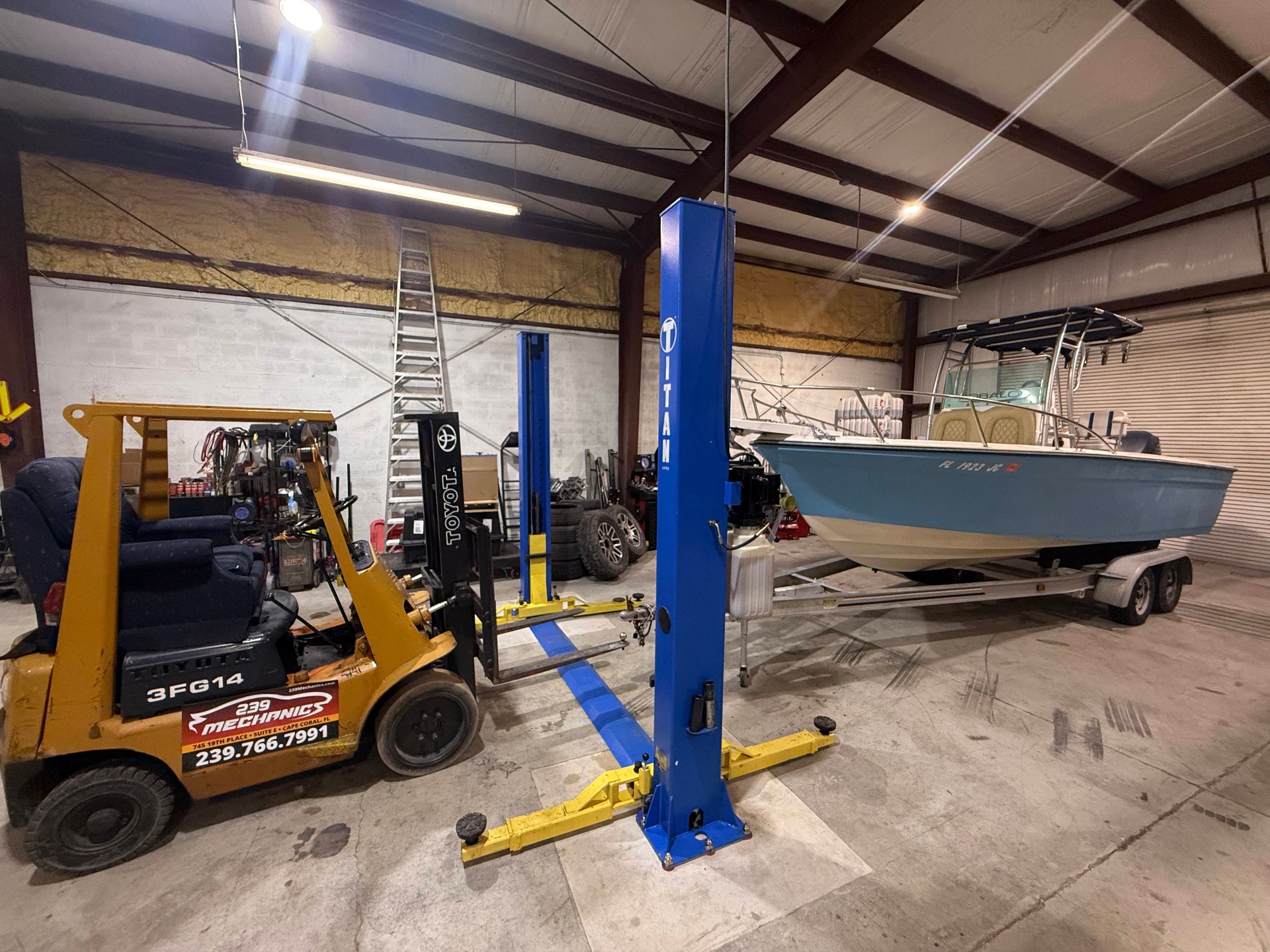
At 239 Mechanics in Cape Coral, we service both automotive and marine engines. Our technicians understand the unique challenges of marine maintenance in Southwest Florida's saltwater environment. From routine service to major repairs, we'll keep your boat running reliably all season long.
Need help with your vehicle? Contact 239 Mechanics today.